
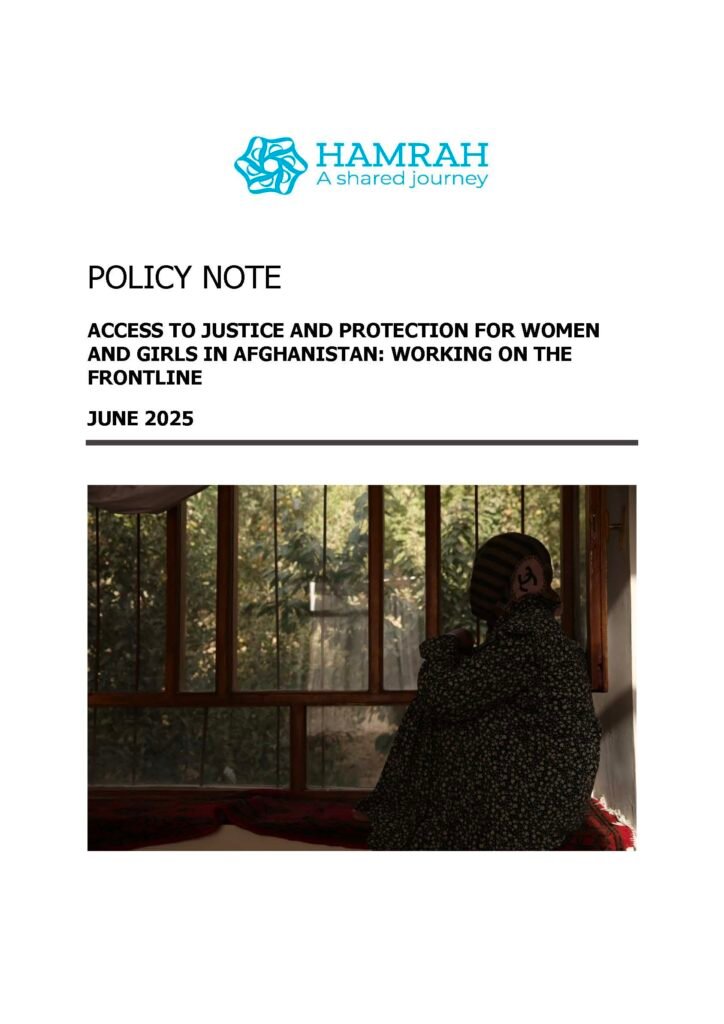
This policy note is based on a submission by the HAMRAH Initiative1 to the UN Special Rapporteur on the Situation of Human Rights in Afghanistan for his report on access to justice and protection for women and girls for the UN Human Rights Council 59th Session.2 It draws on the experience of HAMRAH cohort members (10 Afghan civil society organisations (CSOs), working in exile but with programs and other activities in Afghanistan), and includes recommendations to the international community. The briefing highlights the devastating consequences of the dismantling of pre-2021 legal and institutional justice and protection frameworks by the Taliban, and the way in which women and girls are deliberately and systematically prevented from accessing justice and protection under the de facto authorities.
Taliban-run courts and fragmented justice institutions operate without transparency, due process, or accountability. The application of “justice” is often arbitrary and is frequently used to punish dissent, enforce discriminatory edicts, or enable extortion. Complaints by women, especially in cases involving domestic violence, forced marriage, or sexual abuse, are routinely ignored or dismissed by de facto judicial authorities.
Simultaneously, protection mechanisms for women and girls have largely collapsed. Shelters for survivors of gender-based violence are now closed, and female survivors of abuse must remain in or are forced to return to abusive households. The Taliban’s policies, including the mandatory male guardianship (mahram) for travel requirement, expose women to yet greater risks by restricting their ability to move freely and independently, even in emergencies. Women and girls with disabilities face additional barriers to accessing services and support due deeply entrenched discrimination and exclusion.
Under the Taliban, LBTQ women and others with diverse sexual orientation or gender identity have no possibility of accessing justice and few options for protection other than to leave the country. However, this route is closed to most including because of the prohibitive financial costs, the difficulties in obtaining travel documents and visas, and the increasingly restrictive evidentiary requirements on Afghan asylum seekers being imposed by countries of asylum.


